For decades, airport hotels were viewed as a place you stayed because you had to, not because you wanted to. However, there has been a steady shift from beige walls, forgettable breakfast buffets and bare-bones amenities as airport hotels become destinations in their own right, driven by a fundamental blurring of business and leisure travel.
This is evident in the growth of “bleisure” travel, or tacking a vacation onto the front or back end of a business trip. According to Expedia’s latest Traveler Value Index, this segment has surged, with 42% of consumers now planning such trips, up from 29% in 2023. Additionally, nearly 45% are planning “flexcations,” or working remotely for a portion of an otherwise leisure trip.
That shift is reshaping demand at the property level. Airport hotels globally posted average occupancy of roughly 72% in 2025, outperforming many urban hotel categories, according to recent industry research by Market Intelo. As convenience-driven stays are no longer the category’s only draw, the global airport hotel market is expected to increase to $38.7 billion by 2034, up from $22.4 billion last year.
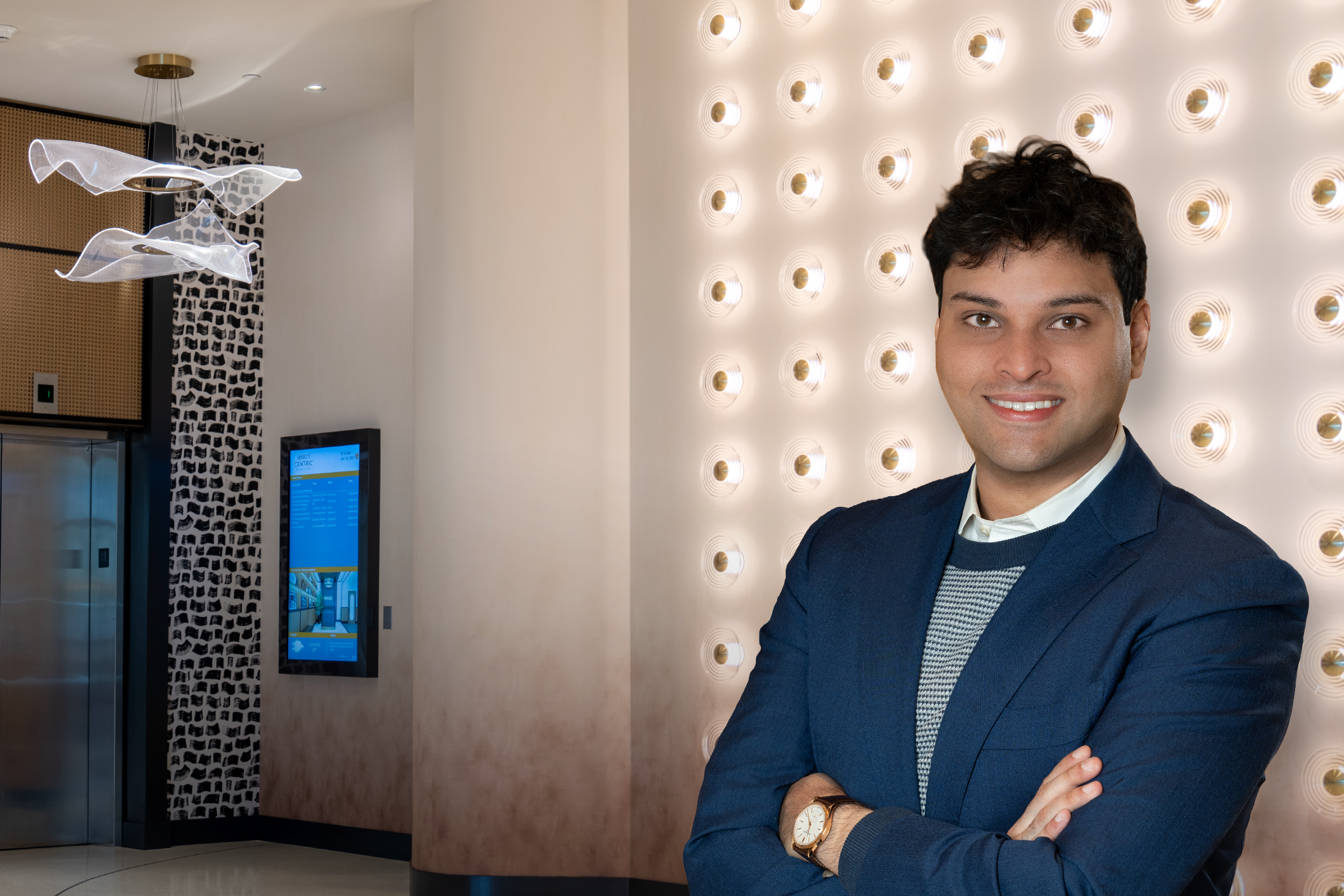
This thesis drove much of Bradford Allen’s recent $30 million redevelopment of Hyatt Centric Chicago O’Hare (HCCO), a lifestyle boutique hotel adjacent to Chicago O’Hare International Airport. Knowing that HCCO could and should be more than a convenient layover, we made intentional design and operation choices that elevated the guest experience.
Airport and business hotels, for example, once defaulted to neutral-on-neutral palettes built for consistency across a portfolio. The remodeled guest rooms at HCCO, however, include pops of color and rich textures. Guest bathrooms feature multi-fixture walk-in showers and lighted mirrors – a finish quality once reserved for luxury flagships that has now migrated into airport hotels.
The redesigned lobby is expansive and versatile, built to flow directly into CIMA, the property’s chef-driven restaurant that uses seasonal Midwestern ingredients in Mediterranean-inspired dishes. Rather than catering solely to the convention and business crowds, this destination dining concept is attractive to leisure travelers and even draws locals who don’t regularly stay at the hotel – but, after frequenting the restaurant, may recommend it to visiting friends and family members.
Details that localize and enhance the guest experience include a signature artwork depicting the Bean and downtown skyline, while partnerships with Dark Matter Coffee and Molly’s Cupcakes provide curated conveniences. Recognizing the larger role that pets play in travel decisions, HCCO offers complete pet packages including beds, bowls and all-natural treats.
This shifting luxe airport hotel trend is perhaps most tangible with the amenities. In the past, these were limited and spartan, but now we are seeing offerings that are typical in a luxury downtown hotel. HCCO’s fitness center, for example, has streaming-enabled equipment and refrigerated towels, demonstrating the new direction these assets are headed.
With the prevalence of online travel agencies and the continued merging of business and leisure travel, today’s fliers are more discerning, better informed and less tolerant of a purely transactional stay than those even a decade ago. In order to capture a larger share of this growing segment, Bradford Allen treats F&B, design and amenities as genuine differentiators at airport hotels. Ultimately, viewing every aspect of the guest experience as a strategic investment positions these properties to drive stronger occupancy, higher rates and greater long-term value.