With approximately 63,000 hotels in the United States, it’s more important than ever to stand out. Renovations can help attract guests, but some upgrades are more likely than others to drive stronger performance and guest satisfaction. For full-service lifestyle hotels, the most successful transformations balance cost with clear operational and experiential gains.
Guestrooms
Few renovations deliver faster returns than refreshed guestrooms that feel modern, comfortable, and functional. Guest bathroom upgrades, such as tub-to-shower conversions and high-end finishes and fixtures, create a cleaner, more modern environment that caters to today’s travelers. In the upscale segment and higher, shifting from carpet to hard-surface flooring is a proven value play.
Guests view it as a quality enhancement that helps justify higher rates, and operators benefit from faster cleaning and less frequent replacements. While swapping out Millennial gray for a more colorful palette is a simple and low-cost way to appeal to younger travelers, other décor updates, like new soft seating or desks, tend to have limited impact. Gone are the days when guests needed hardline desk setups; now they expect simple, reliable streaming and smart-room functions.
Lobby
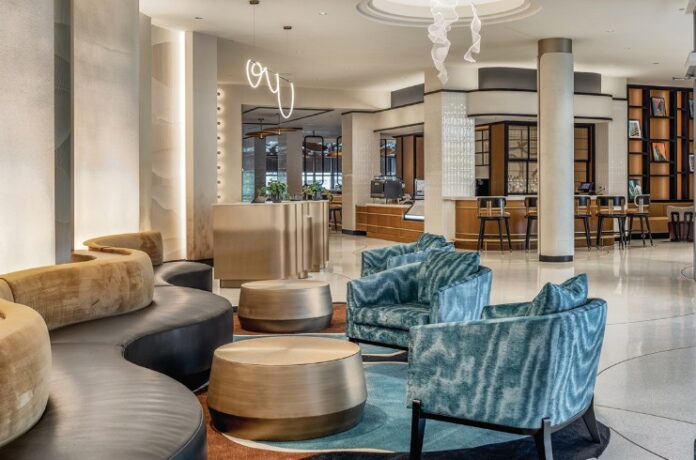
The lobby and front desk serve as the hotel’s opening statement, and a memorable arrival experience sets the mood for everything that follows. With Bradford Allen’s $30 million renovation of Hyatt Centric Chicago O’Hare, a refreshed all-glass porte-cochere welcomes guests into a sun-lit lobby. A mix of seating options encourages guests to socialize, follow up on work, or relax. Carefully designed layout and circulation choices can nudge guests toward connected dining spaces, creating a smoother transition and boosting F&B performance.
Food & Beverage
Revamping F&B spaces can elevate the guest experience while unlocking meaningful ancillary revenue. For example, Cima, a new dining concept at Hyatt Centric Chicago O’Hare, offers thoughtfully sourced Midwest food with a Mediterranean influence, an indoor dining room, a bar, a 50-seat patio, and private event spaces.
Designed as a destination restaurant, Cima also has its own entrance separate from the lobby to help draw in non-hotel-guest diners. Because bar and beverage facilities carry higher margins compared to other segments of the F&B industry, creating a comfortable, engaging space directly influences revenue. When the restaurant feels intentional and inviting, guests are more likely to stay onsite, boosting capture rates in a category where even small increases pay off quickly.
Meeting Space
Meeting and event spaces offer full-service hotels an excellent opportunity to drive incremental revenue beyond guestrooms. Investing in audiovisual equipment rather than renting systems as needed allows hotels to keep more of the profits from their event spaces. Advanced lighting, sound, and projection systems not only enhance the guest experience but also eliminate reliance on external vendors, letting operators capture revenue that would otherwise slip away.
Lighting
Small lighting upgrades can make a surprisingly big impact, beyond operational efficiency. Better lighting improves how spaces appear in photos, which influences guest perception and drives more social sharing. Unlike other typical hotel renovations like furniture or bedding, lighting changes are relatively low-cost but high-impact.
In addition to these high-ROI renovations, the one improvement that is disproportionate to any other upgrade is developing high-quality staff. Well-trained, attentive employees increase guest satisfaction, leading to repeat stays, higher occupancy, positive reviews, and stronger word-of-mouth. Full-service hotels that invest in competitive compensation, training, and career development will reduce the cost of turnover over time.
Ultimately, the best hotel renovations are the ones that guests actually notice and are willing to pay a premium for. When upgrades are tied to guest behavior and demand, they can reset a property’s trajectory for the next decade.
A version of this editorial previously appeared in Lodging Magazine on February 17, 2026.
Author